Library
Every video on the site, each one a lesson with its own questions. Search by title, speaker or topic, or filter by level and length.

Five minutes from the Bank of England, filmed in its gold vaults, on what money is today.

Brett Scott, a writer with a background in economic anthropology, takes apart the opening story of many economics textbooks: that people once lived by barter and invented money to escape its hassles.

Kelton turns a lecture room into an imaginary country with its own currency.

Wray's online lecture for Modern Money Lab, an Adelaide-based MMT education charity, argues that money has always been a record of debt in a unit of account set by authorities.

Fourteen minutes from TEDMonterey in 2021, and the best first look at government finance for someone who has never studied it.

Brett Scott, who comes from economic anthropology rather than economics, gives a free-form, twenty-minute introduction to MMT.

A thirty-minute talk by Damien White, Treasury's Deputy Secretary for the Fiscal Group, at the RBA's Teacher Immersion Event on 18 July 2025.
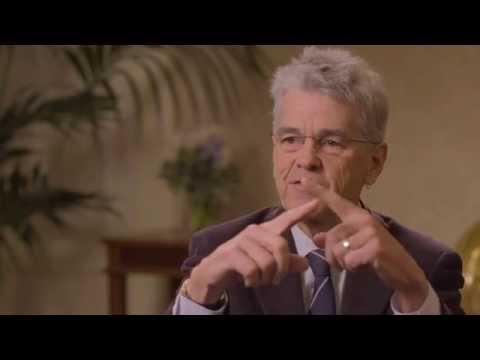
A 23-minute interview from 2014 for the Institute for New Economic Thinking with Bill Mitchell of the University of Newcastle, often credited with coining the name Modern Monetary Theory.

Five minutes from the Bank of England on where money comes from in a modern economy.

A ten-minute narrated walk-through of Richard Werner's research on banking, including his 2014 study in which he took out a loan from a cooperating bank and checked what happened in its books.

Five minutes, recorded in 2010, from Randall Wray, a former student of Hyman Minsky who has worked to republish and apply his ideas.
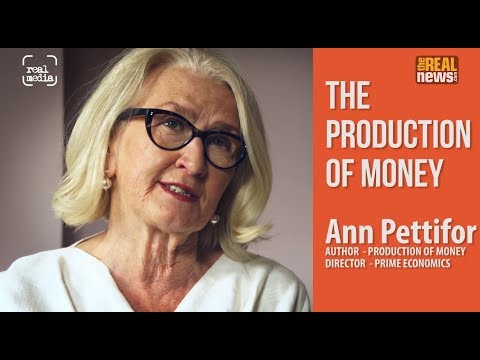
A twelve-minute interview recorded during the 2017 UK general election, soon after Pettifor published The Production of Money.

The RBA's own eleven-minute explanation of its 2 to 3 per cent inflation target: what inflation is, why rapidly rising and falling prices are both costly, and how the cash rate is used to keep the economy close to its potential.

A short animation, under four minutes, of Weber's account of the 2021 to 2023 inflation.

An hour-long Australia Institute webinar from 2023 in which economist Jim Stanford interviews Weber about sellers' inflation.

A four-minute ABC Lateline Business report from July 2012 on the history and politics of Australia's inflation measure, including a short interview with Newcastle economist Bill Mitchell.


An 18-minute talk Mitchell gave at the Full Employment Workshop in Sydney on 30 May 2015, the 70th anniversary of Australia's 1945 White Paper on Full Employment.

Bill Mitchell explains the Job Guarantee in this eight-minute interview from 2014.

An hour-long online seminar at Brown University's Rhodes Center, hosted by Mark Blyth, on Tcherneva's book The Case for a Job Guarantee.

A four-and-a-half-minute excerpt from Steve Grumbine's interview with Warren Mosler for Real Progressives, about Medicare for All in the United States and how Bernie Sanders' campaign proposed to pay for it.

An eight-minute segment from The Project, recorded in 2024 after the Stage 3 tax cuts were redesigned.

A three-and-a-half-minute excerpt in which Hudson summarises the classical idea of economic rent: income from owning land, natural resources or monopolies rather than from producing anything.

Denniss's 19-minute opening address at a National Press Club debate with Allegra Spender MP on 31 January 2024, as the Stage 3 tax cuts were being redesigned.

Chang's eleven-minute animated talk, drawn from his book Economics: The User's Guide, argues that economics is not one settled science but several schools with different assumptions and values, and that ordinary citizens can and should judge economic arguments.

A three-minute clip in which Mosler, in conversation with Stephanie Kelton, makes the case that in real terms imports are a benefit and exports a cost: what a country gets to consume is what it produces plus what it imports, minus what it ships away.

Kaboub, interviewed on a Sri Lankan current-affairs program, argues that the IMF and World Bank belong to a colonial-era economic architecture that keeps the Global South supplying cheap raw materials and importing technology, and that countries should cooperate regionally to build their own food, energy and manufacturing capacity.

Mitchell's Maastricht lecture, based on his book Eurozone Dystopia, argues that the euro was flawed from the start: it bound very different economies to one currency without a central budget able to support a region in a slump.

A 62-minute Per Capita webinar, recorded in late 2023, in which finance journalist Alan Kohler discusses his Quarterly Essay The Great Divide.

A 63-minute Australia Institute book club, recorded in March 2024, in which economist Cameron Murray discusses his book The Great Housing Hijack with Greg Jericho.

A 69-minute episode of The Elephant in the Room, an Australian property podcast, recorded in 2022 as interest rates began to rise.
Nothing matches. Try fewer words.