Progressive Money

Topic 3 of 8

Banks & debt

How private banks create money when they lend, what limits them, and why some economists see private debt as the bigger risk.

4 lessons · about 1 h 5 min with activities · beginner first

Before the videos

Key ideas for this topic

Start with the Bank of England's five-minute account of how loans create deposits, then see the same mechanics as bookkeeping in a walk-through of Richard Werner's research. Randall Wray then explains Hyman Minsky's theory of how debt builds up in good times, and Ann Pettifor asks who bank-created money is for.

Builds on: Topic 2 showed how a currency-issuing government spends new money into existence; this topic shows the other main source of new money, bank lending, and why it creates debts as well as deposits.

Ideas you'll need

1Assets, liabilities and what a deposit really is

Every bank keeps a balance sheet. On one side are its assets: things it owns or is owed, such as the loans it has made, government bonds, and its balance at the Reserve Bank. On the other side are its liabilities: what it owes to others. The difference between the two is the bank's capital, which belongs to its shareholders.

Your deposit sits on the liabilities side. When you see $2,000 in your account with a Newcastle branch of a big bank, that is not a pile of notes kept in your name. It is a promise by the bank to pay you $2,000 when you ask, either as cash or by sending the money somewhere else. Legally, you have lent the bank $2,000.

Your mortgage or car loan is the reverse. To you it is a liability. To the bank it is an asset, because you have promised to repay it with interest.

Keep this in mind for every video in this topic: a deposit is a bank's IOU, and a loan is the borrower's IOU to the bank. Most of what we call money in Australia is the first kind.

2How a loan creates a deposit, and repayment destroys it

When a bank approves a $500,000 home loan, it does not take $500,000 from other customers' accounts. It records a new $500,000 loan as an asset and, at the same moment, credits a new $500,000 deposit, usually to the seller's account. Both sides of its balance sheet grow. New money now exists. The Bank of England (2014) and the RBA (2018) both describe lending this way.

Repayment runs in reverse. When you pay down a loan from your deposit, both the deposit and the loan shrink, and that money disappears. Money is constantly being created and destroyed as people borrow and repay.

Notice what bank lending does not do. The borrower gains a deposit but owes an equal loan, so the non-government sector as a whole is no richer in financial terms: every new financial asset comes with a matching liability. That is the key difference from government deficit spending, which adds deposits to private accounts without a matching private debt, and so adds to the private sector's net financial assets (Topic 2). Bank credit lets people spend now against future income; it does not add to their net wealth.

3What limits bank lending

If banks can create deposits by lending, why don't they lend without limit? Because each loan has to make sense for the bank, and several things constrain it.

  • Profitability and creditworthy borrowers. A loan is only worth making if the borrower is likely to repay and the interest earned covers the bank's costs. Lending also depends on people wanting to borrow.
  • Capital. APRA requires banks to hold capital against their loans, weighted by risk, to absorb losses. More lending needs more capital, which is costly to raise.
  • Liquidity and settlement. When a borrower pays someone at another bank, the two banks settle in central bank money: in Australia, balances in exchange settlement accounts at the RBA. A bank that lends more than it attracts in deposits must find that money elsewhere. APRA also requires banks to hold liquid assets for withdrawals.
  • The price of reserves. The RBA sets the interest rate it pays on these balances and a target for the cash rate, and lends extra balances at a rate just above that target. That flows through to what banks pay for funding and charge borrowers.

Two common mistakes follow. Banks do not lend out their reserves to households, who cannot hold them. And banks cannot create money 'without limit': the constraints are real, even though a fixed stock of savings is not one of them.

4Private debt: when borrowing becomes a risk

Private debt is not bad in itself. A first-home buyer in Maitland who borrows against thirty years of future wages is doing something sensible. The questions are how fast debt grows compared with incomes, and how easily borrowers can keep up repayments if rates rise or incomes fall.

Australian household debt rose from about 70 per cent of household disposable income in the early 1990s to about 190 per cent by 2018, mostly mortgages, according to the RBA. The RBA monitors this closely, and stresses that the aggregate figure can hide which households are vulnerable: who holds the debt, and how much equity and savings they have, matter too.

Some ideas here are widely accepted. Rapid growth in private credit tends to come before financial crises, and heavily indebted households cut spending sharply when things go wrong. Other ideas are contested. Hyman Minsky described borrowers drifting from hedge finance (income covers interest and repayments) to speculative finance (income covers only interest, so debts must be rolled over) to Ponzi finance (borrowers must borrow more or sell assets just to pay interest), and argued that capitalism does this to itself in good times. Whether that instability is built in, or can be regulated away, is one of the debates in this topic.

✎Worked example: a bank's balance sheet, step by step

Harbour Bank is a small bank. All figures are in millions of dollars. The first table shows its whole balance sheet; the others show only what changes.

  1. 1Where Harbour Bank starts

    Harbour Bank has made $900 million of loans and holds $100 million in its settlement account at the RBA. It owes its depositors $920 million. The difference between what it owns ($1,000 million) and what it owes ($920 million) is its capital, or equity: $80 million belonging to its shareholders. Capital is shown on the right-hand side because it balances the sheet: it is what would be left for shareholders, not money the bank owes anyone.

    Harbour Bank
    AssetsLiabilities and capital
    Loans to households and firms $900 Customers' deposits $920
    Settlement balance at the RBA $100 Capital (shareholders' equity, the balancing item) $80
  2. 2A new home loan creates a new deposit

    Priya borrows $0.6 million to buy a flat. Harbour Bank adds a loan to its assets and a deposit to its liabilities, at the same moment. No one else's deposit falls. The bank has created $0.6 million of new money, and Priya has an equal new debt.

    Harbour Bank · changes
    AssetsLiabilities
    Loan to Priya +$0.6 Priya's deposit +$0.6
    Priya · changes
    AssetsLiabilities
    Bank deposit +$0.6 Home loan +$0.6
  3. 3The money leaves the bank, and settles in reserves

    Priya pays the seller, who banks with Coast Bank. Her deposit moves to Coast Bank, and Harbour Bank pays Coast Bank $0.6 million from its settlement balance at the RBA. This is why a bank that lends faster than its competitors needs to attract deposits or borrow settlement funds: lending creates deposits, but they don't stay put.

    Harbour Bank · changes
    AssetsLiabilities
    Settlement balance at the RBA −$0.6 Priya's deposit −$0.6
    Coast Bank · changes
    AssetsLiabilities
    Settlement balance at the RBA +$0.6 Seller's deposit +$0.6
  4. 4A bad year: why capital matters

    A local employer closes and $30 million of Harbour Bank's loans will never be repaid. The bank writes them off. Its deposits are still owed in full, so the loss comes out of capital, which falls from $80 million to $50 million. If losses exceeded capital, the bank could not pay its depositors in full. That is why APRA requires banks to hold minimum capital against their loans, and why capital, not reserves, is one of the real brakes on lending.

    Harbour Bank · changes
    AssetsLiabilities and capital
    Loans to households and firms −$30 Capital (shareholders' equity, the balancing item) −$30
  5. 5Repayment destroys money

    Over the year, Harbour Bank's customers repay $50 million of loans from their deposits. Loans and deposits both fall by $50 million: that money is gone. If new lending is smaller than repayments, the amount of bank money in the economy shrinks.

    Harbour Bank · changes
    AssetsLiabilities
    Loans to households and firms −$50 Customers' deposits −$50

Private debt dynamics in one line. If a household's debts grow by 8 per cent a year while its income grows by 4 per cent, the debt-to-income ratio rises every year even though nobody is borrowing recklessly in any single year. A household earning $100,000 with $200,000 of debt (200 per cent) would, a year later, earn $104,000 and owe $216,000: about 208 per cent. Economists agree such a trend raises vulnerability; they disagree about how dangerous it is and what, if anything, to do about it.

Saved in this browser only. It records that you marked it, nothing more.

Lesson 3.1 Beginner5 min video Core about 11 min with questions

Money creation in the modern economy - Quarterly Bulletin

Bank of England

Also step 5 of Start here. If you've done it there, it counts here too.

Before you watch

After watching this video, you should be able to explain how a bank loan creates a new deposit, and why extra central bank reserves are not lent out to households.

Why this matters. Almost every argument about debt, housing and interest rates rests on some picture of where money comes from. This is the official account, from a central bank, and the RBA says the same about Australia.
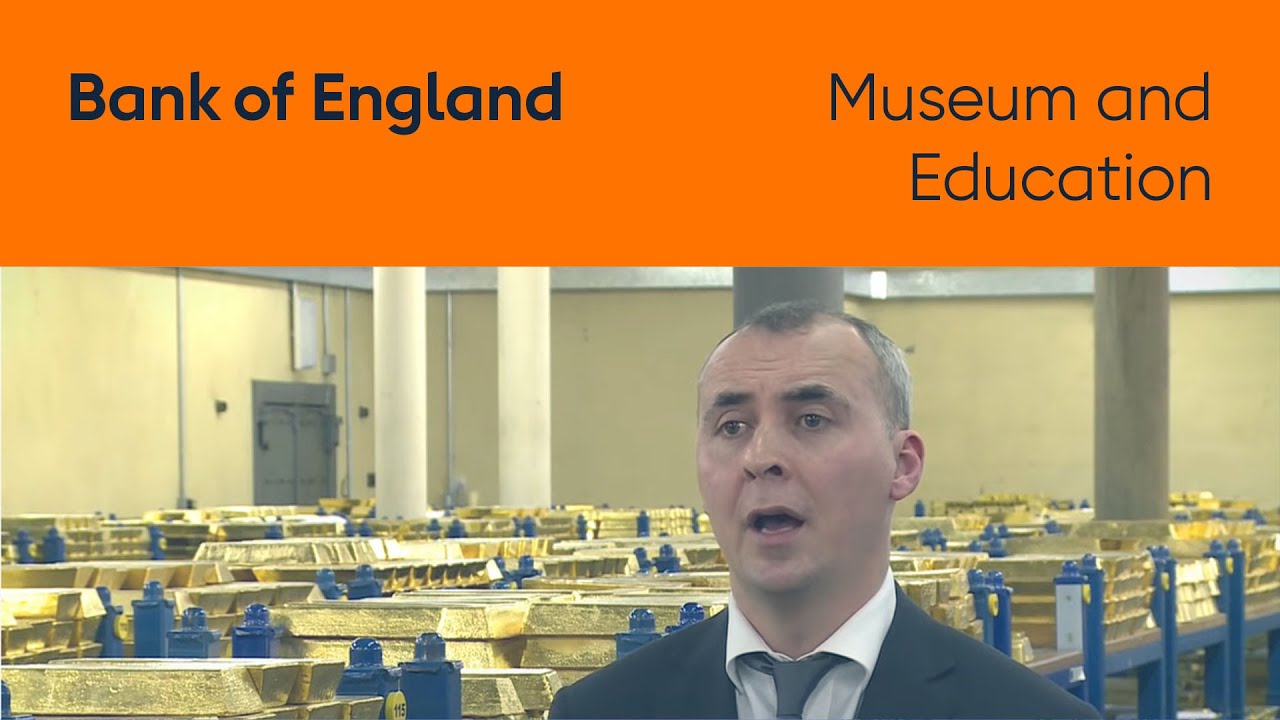
Money creation in the modern economy - Quarterly Bulletin
Play: Money creation in the modern economy - Quarterly Bulletin (5 minutes, opens YouTube)

Five minutes from the Bank of England on where money comes from in a modern economy. Most money is bank deposits, and banks create new deposits when they make loans, rather than lending out savings they already hold. The central bank itself calls the textbook 'money multiplier' story misleading, and it clears up two myths about quantitative easing along the way. The RBA describes the same mechanics for Australia.

Three things to remember

  1. Established Most money is bank deposits. When a bank lends, it credits the borrower's account, so the loan and a new deposit are created together. Repaying a loan cancels deposits, so money is destroyed as well as created.
  2. Official view The Bank of England says lending is limited by banks' need to lend profitably in competition with other banks, by how households and firms respond, and ultimately by monetary policy through interest rates.
  3. Official view Banks cannot lend central bank reserves to households, who have no accounts at the central bank. Quantitative easing adds reserves but also deposits the bank owes, so it is not free money, and it works mainly through asset prices.

Can you explain it?

Optional. Try as often as you like; nothing is scored or sent anywhere.

Leah borrows $40,000 from her bank in Newcastle to buy a car. What happens at the moment the loan is made?

Show the answer

The bank records a $40,000 loan as its asset and credits Leah's account with a new $40,000 deposit.

Right. The loan (the bank's asset) and the deposit (the bank's liability) are created together. Nobody else's balance went down.

Tom has a $15,000 personal loan and $18,000 in his transaction account, both with the same bank. He pays the loan off in full. How much money has been destroyed?

Show the working

Answer: $15,000

Repaying the loan takes $15,000 off Tom's deposit and cancels the $15,000 loan. Both sides of the bank's balance sheet shrink by $15,000, so $15,000 of deposits no longer exists. Tom keeps $3,000.

Lesson 3.2 Intermediate10 min video Go deeper about 18 min with questions

How Do Banks Create Money? A Walk-Through of Richard Werner's Papers

Richard Werner · Werner Economics

Before you watch

After watching this video, you should be able to explain why a bank's loan, unlike a manufacturer's or stockbroker's, adds to both sides of the lender's balance sheet.

Why this matters. Seeing the bookkeeping makes the Bank of England's point concrete. A bank pays out a loan by creating a deposit, which is why bank lending adds to the money supply and other lending does not.

How Do Banks Create Money? A Walk-Through of Richard Werner's Papers
Play: How Do Banks Create Money? A Walk-Through of Richard Werner's Papers (10 minutes, opens YouTube)

A ten-minute narrated walk-through of Richard Werner's research on banking, including his 2014 study in which he took out a loan from a cooperating bank and checked what happened in its books. It compares how a manufacturer, a stockbroker and a bank record a loan, and shows that only the bank pays the loan out by creating a new deposit. It makes the Bank of England's point concrete, though the narration oversells some claims.

Three things to remember

  1. Established A manufacturer or broker lends cash it already holds, so its balance sheet total is unchanged. A bank records the loan as an asset and a new deposit as a liability, so both sides of its balance sheet grow.
  2. Established A deposit is a debt the bank owes you. When you pay someone who banks elsewhere, your bank settles by transferring reserves (in Australia, exchange settlement balances) to their bank, so lending banks still need funding.
  3. Argument Following Werner, the narrator argues banks can do this because they are exempt from rules making other firms keep client money separate. Calling deposits 'fictitious' is rhetoric: they are enforceable claims, guaranteed in Australia up to a limit.

Can you explain it?

Optional. Try as often as you like; nothing is scored or sent anywhere.

According to the video, why does a bank's balance sheet get bigger when it lends, while a manufacturer's does not?

Show the answer

The bank meets its promise to pay the borrower by creating a deposit, a new liability, instead of handing over cash it already holds.

Right. The manufacturer swaps one asset (cash) for another (the loan). The bank adds a loan asset and a deposit liability at the same time.

The video calls bank deposits 'fictitious' and says banks 'do not lend money'. In what sense is that fair, and in what sense is it misleading?

Show a model answer

It is fair in that a bank does not pass on someone else's savings: it pays out a loan by writing a new deposit, which is its own IOU. It is misleading because that IOU is real. Depositors can spend it, it is legally enforceable, and in Australia deposits are protected by the Financial Claims Scheme up to a limit. The bank also takes on real obligations: it must settle payments to other banks in reserves, hold capital against losses and find funding, so the loan is not costless.

A strong answer

  • A bank pays out a loan by creating a deposit rather than passing on savings
  • Deposits are real, enforceable claims on the bank
  • Settlement, capital and funding make lending a real commitment for the bank

Saved in this browser only. It records that you marked it, nothing more.

Continue learning

If banks create money when they lend, what happens when everyone borrows heavily at once? Next, Randall Wray explains Hyman Minsky's account of how debt builds up in good times.

Next: Crash Course on Hyman Minsky, L. Randall Wray

Lesson 3.3 Intermediate5 min video Core about 13 min with questions

Crash Course on Hyman Minsky, L. Randall Wray

L. Randall Wray · New Economic Thinking

Before you watch

After watching this video, you should be able to explain Minsky's idea that stability is destabilising, and why rescues by government and central banks might add to fragility over time.

Why this matters. Australian household debt rose from about 70 per cent of disposable income in the early 1990s to about 190 per cent by 2018, mostly mortgages. Minsky offers one way to think about when private debt becomes a risk.

Crash Course on Hyman Minsky, L. Randall Wray
Play: Crash Course on Hyman Minsky, L. Randall Wray (5 minutes, opens YouTube)

Five minutes, recorded in 2010, from Randall Wray, a former student of Hyman Minsky who has worked to republish and apply his ideas. Wray explains Minsky's argument that long calm periods encourage riskier borrowing and financial innovation, so the system grows more fragile over decades, and that government rescues shorten each crisis without reversing the trend. Minsky died in 1996, so he warned of a tendency rather than forecasting 2008, but his ideas were widely revisited after the crisis.

Three things to remember

  1. Argument Wray argues, following Minsky, that stability is destabilising: calm years build confidence, which encourages more borrowing, riskier positions and financial innovations that get around regulation.
  2. Argument Wray argues that big government and an active central bank stopped post-war crises becoming depressions, but by ending each crisis quickly they let fragility keep building: a 'Minsky half century' rather than a single 'Minsky moment'.
  3. Established The video's core idea, that credit booms come before crises, now has strong mainstream evidence behind it: across 14 countries from 1870 to 2008, rapid credit growth was a powerful predictor of financial crises.

Can you explain it?

Optional. Try as often as you like; nothing is scored or sent anywhere.

In Minsky's argument as Wray explains it, why might a long period without a crisis make one more likely?

Show the answer

Calm years make lenders and borrowers more confident, so they take on more debt and riskier positions.

Right. The stability itself changes behaviour. Confidence turns into leverage, and leverage makes the system fragile.

An Australian household has a large variable-rate mortgage. Using Minsky's hedge, speculative and Ponzi categories from the primer, explain how rate rises could move it from one category to another.

Show a model answer

At first the household is a hedge borrower: its income covers both interest and the principal it repays. If rates rise sharply, repayments climb while income does not, so it may only manage the interest and rely on extending or refinancing the loan, which makes it speculative. If it can no longer cover even the interest and must borrow more or sell the home, it is in Ponzi territory. Minsky's point is that the same shock does far more damage when many borrowers are close to these lines.

A strong answer

  • Hedge: income covers interest and principal
  • Higher rates raise repayments relative to income
  • Speculative and Ponzi positions depend on refinancing or selling assets

Saved in this browser only. It records that you marked it, nothing more.

Continue learning

Last in this topic, Ann Pettifor asks the political question that follows: if banks create most money, who decides what it is created for?

Next: Ann Pettifor - The Production of Money

Lesson 3.4 Intermediate12 min video Go deeper about 20 min with questions

Ann Pettifor - The Production of Money

Ann Pettifor · Real Media

Before you watch

After watching this video, you should be able to explain Pettifor's distinction between credit for productive investment and credit for speculation, and why she thinks it matters for repaying debt.

Why this matters. If banks create most money, what they lend it for shapes the whole economy. That is a live question in Australia, where household debt is mostly mortgages on homes.

Ann Pettifor - The Production of Money
Play: Ann Pettifor - The Production of Money (12 minutes, opens YouTube)

A twelve-minute interview recorded during the 2017 UK general election, soon after Pettifor published The Production of Money. She asks who bank-created money is made for, argues it too often funds speculation such as London property rather than productive investment, and attacks the claim that there is 'no money' for public services, before ending with a critique of growth as a goal. Good for connecting banking mechanics to questions of power, but several claims are her arguments rather than settled economics.

Three things to remember

  1. Established Pettifor's starting point matches the central banks: private banks create most money. The Bank of England puts bank deposits at 97 per cent of UK broad money in 2013; she quotes about 95 per cent.
  2. Argument Pettifor argues that credit spent on productive activity creates the income to repay it, while credit used to bet on rising asset prices, such as London housing, may not, so who gets credit matters.
  3. Argument Pettifor argues taxes follow spending rather than fund it, and that public investment in education and health returns revenue through the multiplier. How much returns depends on the multiplier's size and long-run effects.

Can you explain it?

Optional. Try as often as you like; nothing is scored or sent anywhere.

Pettifor says building a school generates taxes from builders, teachers and shopkeepers. What does this show, accurately stated?

Show the answer

Some of the spending comes back as tax revenue, so its net cost is lower than its headline cost.

Right. That is the multiplier at work. Whether all of it comes back depends on the multiplier's size and long-run effects such as a more skilled workforce.

Much new lending in Australia finances existing homes. Using Pettifor's distinction, explain one risk of a credit system that lends mainly against existing assets.

Show a model answer

Lending to buy an existing home does not add new production; it mostly bids up the price of the asset. The loan is repaid from the borrower's wage and, the lender assumes, from a rising house price. If prices stop rising or rates rise, households carry large debts that were never matched by new income, and they cut spending to service them. Pettifor would say credit aimed at productive investment is more likely to generate the income needed to repay it.

A strong answer

  • Credit for existing assets raises prices rather than output
  • Repayment relies on wages and rising asset prices
  • Productive investment creates income that can service the debt

Saved in this browser only. It records that you marked it, nothing more.

Continue learning

Pettifor insists there is no shortage of money. Topic 4 asks what does limit spending, by governments and banks alike: inflation.

Next: where this topic is contested

The big debate in this topic

Does private debt matter more than public debt?

Saved in this browser only. It records that you marked it, nothing more.

Where this leads. Whether money comes from banks or governments, spending eventually runs into the economy's real limits, which is where Topic 4, on inflation, begins.