Economists and educators
The people and institutions whose work the course draws on: economists and researchers, central banks and Treasury, journalists and educators. They don't all agree with each other, and the course is better for it. Credentials are described as they are, and checked against public profiles.
Economists and researchers
Stephanie Kelton
Stony Brook University, USA
Modern Monetary Theory; government finance; fiscal policy
Professor of Economics and Public Policy at Stony Brook University and author of The Deficit Myth (2020). In 2015 she was chief economist for the Democratic staff of the US Senate Budget Committee.


Bill Mitchell
University of Newcastle, Australia (Emeritus Professor)
Currency sovereignty; full employment; the Job Guarantee
Emeritus Professor at the University of Newcastle and director of its Centre of Full Employment and Equity (CofFEE). One of the founders of MMT and widely credited with coining its name, with decades of research on Australian unemployment.


Warren Mosler
Independent; former fund manager, USA
Monetary operations; taxes and the value of money; the Job Guarantee
Former fund manager whose experience trading government securities led him to the core ideas of MMT, set out in Soft Currency Economics (1993). Author of The Seven Deadly Innocent Frauds of Economic Policy.

L. Randall Wray
Bard College / Levy Economics Institute, USA
History of money; Minsky; monetary operations
Professor of Economics at Bard College and Senior Scholar at the Levy Economics Institute. A student of Hyman Minsky, author of Why Minsky Matters and of the textbook Modern Money Theory.


Pavlina Tcherneva
Levy Economics Institute (President) / Bard College, USA
The Job Guarantee; unemployment and wellbeing
President of the Levy Economics Institute and professor of economics at Bard College. Author of The Case for a Job Guarantee (2020) and of a detailed design for a US job guarantee.

Steve Keen
University College London (Honorary Professor); Australian
Private debt; endogenous money; Minsky; critique of mainstream models
Australian post-Keynesian economist and Honorary Professor at UCL. From 2005 he warned publicly that rising private debt would end in a crisis, and won the 2010 Revere Award for it. Author of Debunking Economics.

Michael Hudson
University of Missouri-Kansas City, USA
Economic rent; financialisation; debt; the history of money
Distinguished Research Professor of Economics at UMKC and president of ISLET. Writes on economic rent, debt and finance, and on debt cancellation in the ancient Near East (...and forgive them their debts, 2018).

Richard Werner
Professor of banking and finance (Modul University Vienna; formerly University of Winchester)
Bank credit creation; the credit theory of banking
German economist who in 2014 published an empirical test showing that an individual bank creates new deposits when it lends. In mid-1990s Japan he proposed a policy he called 'quantitative easing'. The video on this site is a narrated summary of his research, not Werner himself.

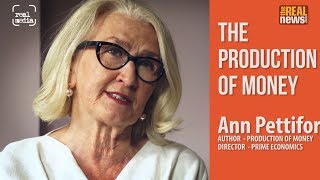
Ann Pettifor
Policy Research in Macroeconomics (PRIME), UK
Money as a public good; credit; the Green New Deal
Director of Policy Research in Macroeconomics (PRIME) and one of the leaders of the Jubilee 2000 debt-cancellation campaign. Author of The Production of Money (2017) and The Case for the Green New Deal (2019).
Ha-Joon Chang
SOAS, University of London, UK
Development; trade; economic pluralism
Research Professor of Economics at SOAS, University of London, after three decades at Cambridge. His Kicking Away the Ladder (2002) argues that today's rich countries developed behind protection. Author of Economics: The User's Guide.

Isabella Weber
University of Massachusetts Amherst, USA
Sellers' inflation; price controls
Associate Professor of Economics at UMass Amherst. With Evan Wasner she argued (2023) that firms with market power used supply shocks to raise prices and margins, which she calls 'sellers' inflation'. The argument is influential and contested.


Fadhel Kaboub
Denison University, USA / Global Institute for Sustainable Prosperity
Monetary sovereignty in the Global South
Associate Professor of Economics at Denison University and president of the Global Institute for Sustainable Prosperity. Works on monetary sovereignty, foreign-currency debt and development finance in Africa and the Global South.

Cameron Murray
Independent economist, Australia
Australian housing; land and property markets
Independent Australian economist who specialises in property markets. In The Great Housing Hijack (2024) he argues that developers build at a limited rate whatever the planning rules, so rezoning alone will not make housing cheap.

Richard Denniss
The Australia Institute (co-CEO), Australia
Australian tax policy; public finance
Economist and co-chief executive of The Australia Institute, a progressive think tank, which he has led for most of the past two decades. Writes widely on tax and public finance.

Greg Jericho
The Australia Institute / Guardian Australia
Australian labour market and tax; data journalism
Chief Economist at The Australia Institute and a weekly economics columnist for Guardian Australia since 2013. Known for plain-English, chart-driven explainers on jobs, wages and tax.

Officials and institutions
Damien White
Australian Treasury
Fiscal policy; the Budget
Deputy Secretary of Treasury's Fiscal Group, which advises on the Budget and fiscal strategy. Included as an official, mainstream voice on how the Australian Government's finances work.

Bank of England
Central bank of the United Kingdom
Money; banking; monetary policy
The UK's central bank. Its 2014 Quarterly Bulletin articles and videos on money and money creation, written by staff economists Michael McLeay, Amar Radia and Ryland Thomas, are among the clearest official accounts of how modern money works.
Money creation in the modern economy (2014) (opens in a new tab)


Reserve Bank of Australia
Australia's central bank
Monetary policy; inflation; the financial system
Australia's central bank, which sets the cash rate to pursue low and stable inflation and full employment, and banks for the Australian Government. Its education explainers are a reliable guide to how the mainstream framework sees the economy.

Journalists and educators
Alan Kohler
ABC (finance presenter to December 2026), Australia
Australian housing; finance journalism
Finance journalist, not an economist: ABC finance presenter for more than three decades and founder of Eureka Report and Business Spectator. His Quarterly Essay The Great Divide (2023) traces how housing became a driver of inequality.

Brett Scott
Independent writer, UK
Money as a social technology; the history of money; MMT for outsiders
Writer, campaigner and former broker who explains money without assuming any economics. Author of Cloudmoney and the Altered States of Monetary Consciousness newsletter.

